Tucson gets over 5.8 million visitors a year, and a lot of them are figuring out the same thing quietly: how do you actually enjoy a city built around wide desert terrain, uneven trails, and sprawling resort properties when walking is hard? The answer is more practical than people expect, and it starts before you pack a single bag.
The Scale of Mobility Needs Nobody Talks About
Here’s a number worth sitting with. According to the CDC’s 2022 Behavioral Risk Factor Surveillance System data, more than 1 in 4 adults in the United States, roughly 70 million people, reported having a functional disability in that year. Mobility limitations are the most common type. That means a substantial chunk of every hotel lobby, tour group, and national park line in Tucson includes people managing the same thing you are.
The conversation around accessible travel tends to focus on permanent disabilities, but that’s only part of the picture. Post-surgery recovery. A sprained ankle that won’t quit. Pregnancy in the third trimester. Arthritis that flares in cold air. Tucson’s winter travel season, which runs roughly November through March, brings in a massive wave of visitors whose mobility needs are real even if temporary. You don’t need a formal diagnosis to need a little extra support on the road.
Why Tucson Is Actually a Good City for This
Tucson has a reputation for rugged outdoors activity, which makes people assume it’s unfriendly to mobility-limited visitors. That assumption is wrong, or at least incomplete. The city’s flat urban core is genuinely navigable. The light rail corridor and wide sidewalks through midtown are accessible. Many of the resort properties, especially in the Foothills and along Broadway, were built in eras when large footprints meant thoughtful ground-floor design.
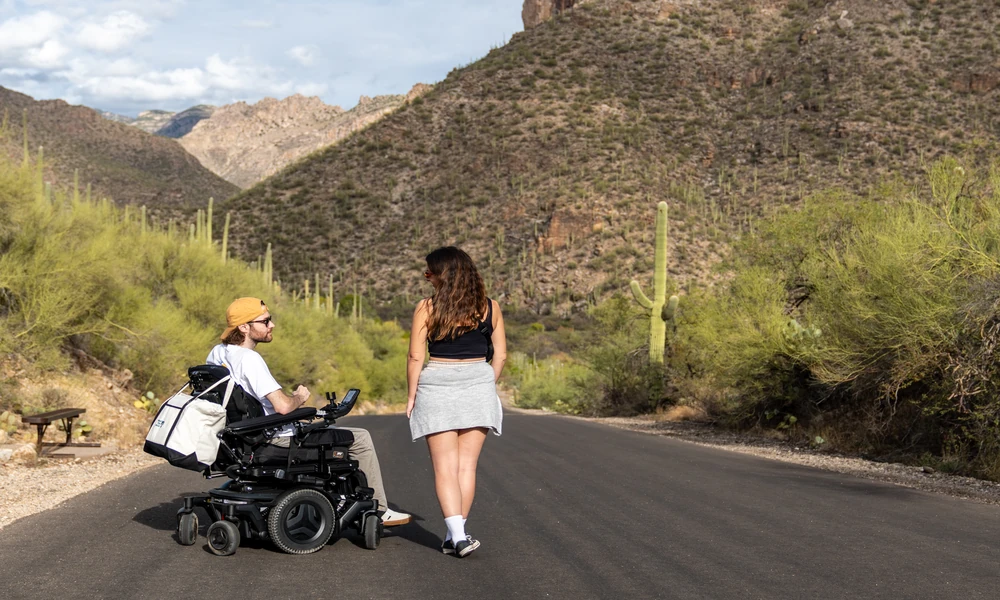
The harder terrain is the natural stuff. Saguaro National Park East sits at the edge of the city and draws thousands of visitors who discover quickly that “desert hiking” and “easy walk” don’t always go together. The Rincon Mountain District has paved, flat loop roads where a scooter or power wheelchair opens up stunning views that you simply cannot get from a parking lot. That’s not a consolation prize. That’s genuinely the best way to experience the landscape without destroying your joints by noon.
Arizona Office of Tourism data from 2023 shows travel spending generated $81.6 million in tax revenue in Pima County alone, a signal that Tucson’s tourism infrastructure is funded and growing. That matters for accessible visitors because more investment means better facilities at major attractions, not just at five-star resorts.
The PACK-STAY-MOVE Framework for Mobility-Limited Visitors
Most travel advice for people with mobility challenges is generic. Here’s a tighter way to think about it. The PACK-STAY-MOVE framework breaks trip planning into three decisions that actually need to happen in sequence, not simultaneously.
PACK means figuring out what mobility equipment you need before you book anything else. This step comes first because your gear affects what hotel room you can use, what activities you can join, and how much energy you have at 3 p.m. on day two. Packing a folding cane when you need a rollator is a problem that doesn’t reveal itself until you’re already there.
STAY means choosing accommodation based on your gear, not the other way around. A manual wheelchair and a ground-floor king room is a simple pairing. A mobility scooter and a boutique hotel with no elevator is a headache you can avoid entirely. Call ahead. Ask specific questions: Is there a step at the entrance? How wide are the bathroom doorways? Where does the scooter charge?
MOVE means planning your daily routes with your gear in mind. Tucson is a driving city, and most attractions have accessible parking. But the gap between “accessible parking exists” and “you can actually get around the site” varies dramatically from place to place. The Arizona-Sonora Desert Museum, for example, is largely paved and cart-assisted. Tumacacori National Historical Park, 45 minutes south, has a gravel path loop that works fine for power chairs but is difficult for manual ones on windy days.
Should You Bring Your Own Gear or Rent On Arrival?
This question matters more than it seems. Bringing a full-size power scooter on a commercial flight is genuinely complicated. Airlines have damaged or lost mobility devices at rates that prompted formal reporting requirements from the U.S. Department of Transportation. Beyond the logistics, you may not need your heaviest piece of equipment for every trip. A shorter visit focused on resort activities requires less gear than a two-week exploration of southern Arizona’s backcountry.
Renting locally is often the smarter move, and Bureau of Transportation Statistics research shows that 57.8% of adults with travel-limiting disabilities already use one or more medical devices, which means the market for rental and trial equipment is well-established and understood by providers. You’re not asking for something unusual. The option to rent mobility equipment in Tucson from a local provider means you pick up a fully charged scooter or the exact rollator model you’ve been curious about, use it for the week, and hand it back. No checked baggage fees. No airport damage risk. No trying to fold something into a rental car trunk that was never designed for it.
The rental approach also has a less obvious benefit: you can try equipment you don’t own yet. If you’ve been debating whether a transport chair or a standard wheelchair makes more sense for your lifestyle, a week in Tucson with one of each on different days tells you more than any product review.
What the City Gets Right (and Where to Be Careful)
Tucson’s sunny weather is a genuine accessibility advantage. Wet surfaces, ice, and temperature extremes are mobility hazards. Between October and April, Tucson gives you dry, mild conditions almost every day. Outdoor patios, open-air markets, and paved resort paths become genuinely comfortable to navigate.
| Tucson Attraction | Accessibility Notes | Best Gear Match |
|---|---|---|
| Saguaro National Park East (paved loop) | Flat, fully paved 8-mile road; no uneven trail required | Power scooter, power wheelchair |
| Arizona-Sonora Desert Museum | Mostly paved paths; tram available; significant distance between exhibits | Scooter, transport chair with companion |
| Tucson Botanical Gardens | Compact, flat, wide paths; very manageable | Rollator, manual wheelchair, scooter |
| Fourth Avenue shops and cafes | Mostly level sidewalks; some older doorways are narrow | Rollator, folding cane, compact scooter |
Where you need to be careful: unimproved parking lots at smaller trailheads, older restaurant buildings with one step at the entrance, and the stretch of Oracle Road north of River that involves some significant cross-traffic distance for anyone moving slowly. None of these are insurmountable. They just reward planning over improvisation.
“People with travel-limiting disabilities face mobility challenges because of lower levels of vehicle ownership and vehicle access than people without disabilities.” – Bureau of Transportation Statistics, U.S. Department of Transportation, April 2024
That finding points to something real for visitors too. Transportation between sites, not just within them, is where the plan can break down. Rideshare apps in Tucson are reliable in the urban core and resort corridors. They’re less predictable in outlying areas. If your mobility equipment doesn’t fold quickly, confirm with your driver before they arrive that there’s room. Tucson’s Sun Tran bus system has accessible vehicles, but routes are limited compared to larger metro areas.
Before You Book: A Five-Point Mobility Checklist
- Confirm your hotel’s room accessibility specs by phone, not just by checking the “accessible room” box online.
- Identify one piece of mobility gear you might need that you don’t currently own, and check local rental options for it.
- Map your three most-wanted activities and check each one’s terrain type: paved, gravel, or unimproved.
- Build in one low-activity afternoon per three days of travel. Fatigue compounds fast when you’re navigating unfamiliar terrain.
- Save the number of a local mobility equipment provider before departure so you’re not searching on day two with a depleted battery.
Tucson rewards visitors who show up prepared. The desert is stunning, the food scene is genuinely great, and the winter light is unlike anything on the East Coast. Mobility challenges don’t have to shrink the trip. They just change the order in which you make your decisions. Get the gear right first, and most of the rest falls into place.